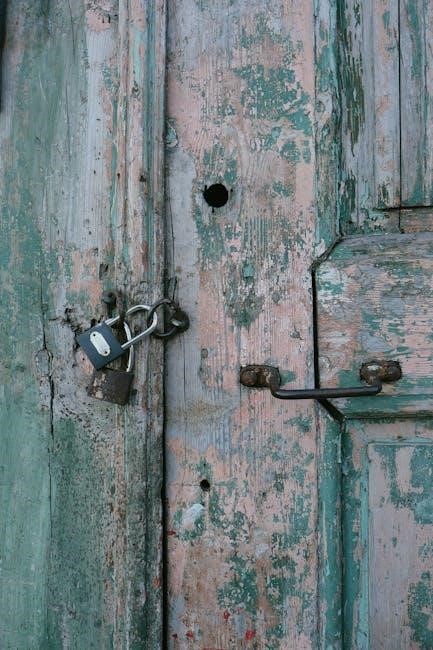
Manual Door Locks: A Comprehensive Guide
Manual door locks offer a traditional security approach, balancing cost-effectiveness with reliability, yet presenting challenges in advanced access control and potential vulnerability;
Manual door locks represent a foundational element of home and building security, relying on physical keys and mechanical mechanisms for operation. These locks have been a mainstay for generations, offering a tangible sense of control and security. Unlike their electronic counterparts, manual locks don’t depend on power sources, ensuring functionality even during outages.
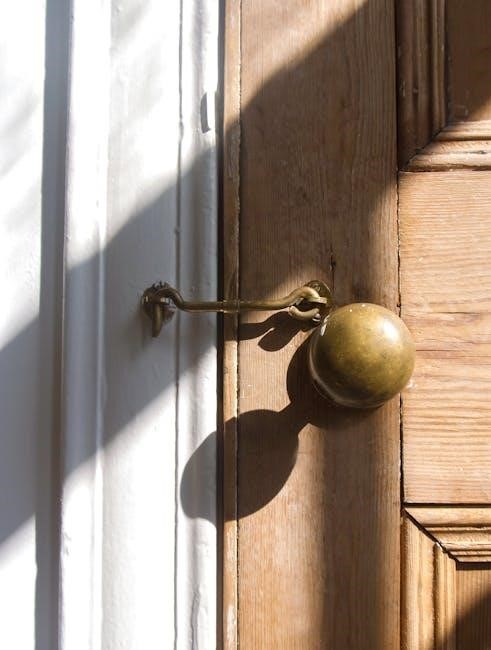
However, they also present limitations, including vulnerability to lock picking and the inconveniences of key management – loss or duplication being primary concerns. Understanding the various types, components, advantages, and disadvantages of manual door locks is crucial for making informed security decisions. This guide provides a comprehensive overview, exploring everything from traditional rim locks to advanced mortise deadlocks.
Historical Overview of Manual Locking Mechanisms
The history of manual door locks stretches back millennia, evolving from simple bolt-and-bar systems in ancient civilizations to the intricate mechanisms we know today. Early locks utilized wood and basic metalworking, gradually incorporating more complex designs with the advent of the Egyptians and Romans. The Middle Ages saw the development of warded locks, offering limited security but representing a significant advancement.
The 18th century brought the invention of the pin tumbler lock by Robert Barron, a pivotal moment in lock technology. This design formed the basis for many modern locks. Throughout the 19th and 20th centuries, refinements in materials and manufacturing led to increasingly secure and reliable manual locking systems, paving the way for the diverse range available today.
Types of Manual Door Locks
Manual door locks encompass a variety of designs, each offering different levels of security and convenience. Knob locks are common, featuring a locking mechanism within the door knob itself, known for ease of use. Lever handle locks provide similar functionality but utilize a lever instead of a knob, often preferred for accessibility.
For enhanced security, deadbolt locks are frequently used, requiring a key to operate a solid bolt. Rim locks, a traditional option, mount on the surface of the door. Finally, mortise locks are complex, high-security locks installed within the door, offering robust protection.
Knob Locks: Functionality and Applications
Knob locks represent a widely recognized manual door lock type, characterized by a locking mechanism integrated directly into the door knob. Their primary functionality centers around simple operation – turning the knob activates or deactivates the latch. These locks are commonly found on interior doors and as part of entry door sets, offering basic security.
However, they are generally considered less secure than deadbolts, being susceptible to forced entry. Applications include bedrooms, bathrooms, and closets where high security isn’t paramount. Their ease of use makes them suitable for all ages, but key-in-knob versions offer limited protection.
Lever Handle Locks: Design and Security Features
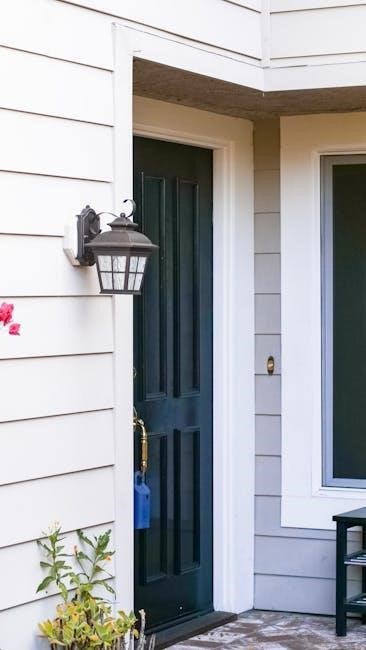
Lever handle locks utilize a lever, rather than a knob, to operate the latch mechanism, offering an alternative manual door lock design; They are often favored for accessibility, requiring less grip strength than knobs, making them ideal for individuals with disabilities or those carrying items. Security features vary; some include keyways for locking, while others function as passage levers without locking capabilities.
When paired with a secure cylinder, lever locks can provide reasonable security, though generally less than a deadbolt. Applications span both interior and exterior doors, prioritizing ease of use alongside basic protection.
Deadbolt Locks: Enhanced Security and Installation
Deadbolt locks represent a significant upgrade in manual door lock security, extending a solid metal bolt deep into the door frame. Unlike knob locks, deadbolts aren’t reliant on the door latch for security, making them far more resistant to forced entry. Installation typically involves drilling a hole through the door for the bolt and cylinder, requiring precision for proper function.
Deadbolts significantly improve security over key-in-knob locks. Single-cylinder deadbolts use a key on the exterior, while double-cylinder require a key on both sides, enhancing security but potentially hindering emergency egress.
Rim Locks: Traditional Security Solutions
Rim locks represent a historical approach to manual door lock security, mounted on the surface of the door rather than within it. These locks are often found on older wooden doors and operate with a key or a turn knob, securing the door with a bolt that extends across the door’s edge into a corresponding strike plate on the frame.
While offering a degree of security, rim locks are generally considered less secure than mortise or deadbolt locks due to their exposed mounting and potential vulnerability to forced entry. They remain a cost-effective option for supplemental security.
Mortise Locks: Complex Mechanisms and High Security
Mortise locks are renowned for their robust security, featuring a complex internal mechanism housed within a pocket – the mortise – cut into the door’s edge. These manual door locks typically utilize a cylinder and a deadbolt, offering substantial resistance to forced entry and lock picking.
Notably, 5-lever mortise deadlocks provide even greater security, engaging multiple locking points. While installation requires skilled carpentry, the enhanced protection makes them a preferred choice for high-security applications. They represent a significant investment in safeguarding property.
Key Components of a Manual Door Lock
Manual door locks rely on several crucial components working in unison. The cylinder/plug is the core, accepting the key and initiating the locking/unlocking action. Keys themselves vary in security levels, with high-security keys offering greater pick resistance. The latch, a spring-loaded bolt, keeps the door closed and provides initial security;
Crucially, the strike plate, mounted on the door frame, receives the latch and bolt, reinforcing the locking point; These elements, combined, create a functional security system, though their effectiveness depends on quality and proper installation.
Cylinder/Plug: The Core Locking Element
The cylinder, or plug, is the central component of most manual door locks, acting as the interface between the key and the locking mechanism. It houses a series of pins that must be aligned correctly by the key to allow rotation. This intricate design prevents unauthorized access, relying on precise key cuts.
Different cylinder types offer varying levels of security; higher-quality cylinders resist picking and drilling attempts. The cylinder’s robustness directly impacts the lock’s overall security, making it a critical element in a manual locking system.
Keys: Types and Security Levels
Manual door lock keys come in various types, ranging from standard, easily duplicated keys to high-security options designed to resist copying. Traditional keys are susceptible to unauthorized duplication, posing a security risk. However, restricted keys require specialized equipment and authorization for replication, enhancing security.
Key security levels are often linked to the key’s cutting precision and the cylinder’s design. High-security keys feature complex cuts and are paired with locks featuring anti-pick and anti-drill mechanisms, significantly increasing resistance to forced entry and unauthorized access.
Latch: Retaining the Door and Initial Security
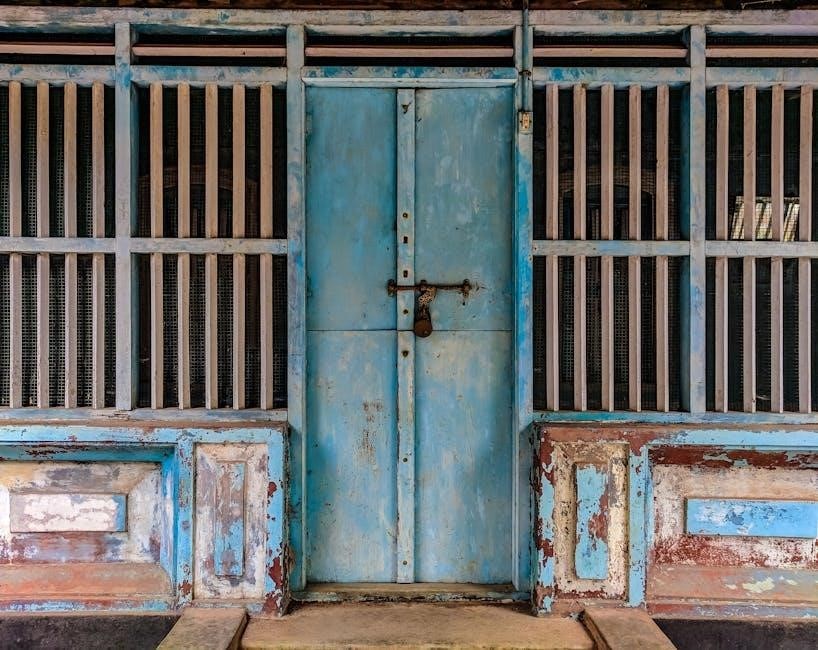
The manual door lock latch is a fundamental component, primarily responsible for physically securing a door within its frame. It extends from the lock mechanism into the strike plate, holding the door closed against wind pressure and casual attempts to enter. While not the primary security feature, the latch provides an initial layer of defense.
Latch designs vary, influencing their strength and resistance to forced entry. Spring latches are common, while heavier-duty latches offer increased durability. A robust latch, combined with a secure strike plate, significantly contributes to overall door security, preventing easy manipulation.
Strike Plate: Receiving the Latch and Bolt
The manual door lock strike plate is a critical, often overlooked, element of door security. Mounted on the door frame, it’s the receiving point for both the latch and the bolt from the lock. A weak or poorly installed strike plate can render even a high-security lock ineffective, as the frame itself becomes the point of failure.
Reinforcing the strike plate with longer screws that reach into the wall stud significantly increases its resistance to forced entry. High-security strike plates are constructed from hardened steel, providing an additional layer of protection against kicking or prying attacks. Proper alignment is also crucial for smooth operation.
Advantages of Manual Door Locks
Manual door locks present several compelling advantages. Notably, they are significantly more cost-effective than their electronic counterparts, making them accessible for a wider range of budgets. Their reliability stems from a lack of dependence on batteries or power sources, ensuring functionality even during outages.
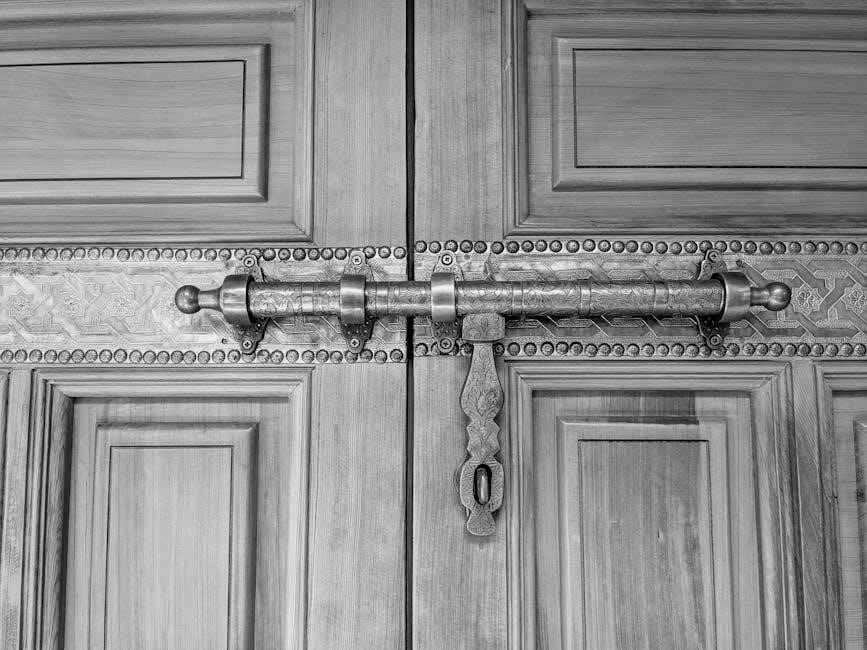
Operation and maintenance are remarkably simple; no complex programming or technical expertise is required. Traditional locks are widely understood and easily repaired. Furthermore, they offer a tactile sense of security – a physical confirmation of being locked – that some users prefer. This simplicity contributes to their enduring popularity.
Cost-Effectiveness Compared to Electronic Locks
Manual door locks demonstrate a clear advantage in cost-effectiveness when contrasted with electronic locking systems. The initial purchase price of a quality manual lock is substantially lower, often by hundreds of dollars, than even a basic smart lock. Installation costs are also typically reduced, as manual locks generally require less complex wiring or professional setup.
Furthermore, there are no ongoing subscription fees or battery replacement expenses associated with manual locks, contributing to long-term savings. While electronic locks offer convenience, the affordability and lack of recurring costs make manual locks a practical choice for budget-conscious homeowners.
Reliability and Lack of Dependence on Power
Manual door locks excel in reliability due to their mechanical nature, operating independently of electrical power. This is a significant advantage during power outages, where electronic locks become inoperable, potentially compromising security. Traditional locks continue to function flawlessly, providing consistent access control regardless of external factors.
The simplicity of the mechanism also contributes to increased durability and reduced maintenance needs. Fewer components mean fewer potential points of failure, resulting in a longer lifespan and dependable performance over time. This inherent reliability offers peace of mind, knowing your security isn’t reliant on electricity.
Simplicity of Operation and Maintenance
Manual door locks are renowned for their straightforward operation – a key turns, a latch retracts, and access is granted; This intuitive functionality requires no specialized training or complex instructions, making them accessible to all users. Furthermore, maintenance is typically minimal, often involving occasional lubrication to ensure smooth operation.
Unlike electronic systems requiring battery replacements or software updates, manual locks demand little ongoing attention. Repairs, when needed, are often simple and can be performed by a skilled locksmith without the need for specialized equipment. This ease of use and upkeep contributes to their enduring popularity and cost-effectiveness;
Disadvantages of Manual Door Locks
Manual door locks, while reliable, possess inherent drawbacks. They are vulnerable to lock picking and forced entry, especially compared to modern electronic systems. Key management presents challenges; loss or duplication compromises security significantly. Limited access control is another disadvantage – granting temporary access requires physical key handover, lacking the remote capabilities of smart locks.

Traditional locks offer less convenience, requiring physical keys for every entry. They lack advanced features like audit trails or remote monitoring. Furthermore, if a key is stolen, re-keying the entire lock system can be costly and disruptive, highlighting a significant security risk.
Vulnerability to Lock Picking and Forced Entry
Manual door locks, particularly simpler mechanisms like knob locks, are susceptible to lock picking by skilled individuals. Forced entry is also a concern; determined intruders can bypass these locks with tools or brute force. Compared to high-security electronic systems, manual locks offer less resistance against determined attacks.
The reliance on physical keys creates a weakness. A compromised key grants easy access. Reinforcing door frames and using deadbolts alongside standard locks mitigates, but doesn’t eliminate, these vulnerabilities. Older or poorly maintained locks are even more easily breached, emphasizing the need for regular inspection and upgrades.
Key Management Issues: Loss and Duplication
Manual door locks inherently present key management challenges. Lost keys require rekeying or lock replacement, incurring costs and potential security risks. Unauthorized key duplication is a significant concern; copies can be made without the owner’s knowledge, compromising security. Controlling key distribution becomes difficult in multi-tenant buildings or with frequent personnel changes.
Unlike keyless entry systems, tracking key access is impractical. The potential for former employees or residents retaining copies poses a lasting vulnerability. Robust key control policies and restricted key duplication services are crucial, but add administrative overhead. This reliance on physical keys is a core limitation.
Limited Access Control Capabilities
Manual door locks offer minimal access control compared to modern systems. Granting or revoking access requires physical key exchange, which is cumbersome and lacks real-time control. There’s no ability to schedule access, monitor entries, or remotely manage who can enter. Distributing temporary access, like for service providers, necessitates key duplication and subsequent retrieval.
Unlike electronic systems, manual locks cannot integrate with building management systems or provide audit trails of entries. This limits security oversight and responsiveness; The “all-or-nothing” access granted by a key doesn’t allow for nuanced permissions, hindering flexible security protocols.
Security Considerations for Manual Door Locks
Manual door lock security hinges on several factors. High-security keys, resistant to picking and duplication, are paramount. Reinforcing door frames and upgrading strike plates with longer screws significantly deters forced entry. Combining a deadbolt lock with a knob or lever lock provides a layered defense, increasing resistance to attacks.
Regularly assess the condition of locks and doors for wear and tear. Consider professional re-keying if keys are lost or compromised. Maintaining visibility around entrances deters potential intruders. Remember, a strong lock is only as effective as the weakest point in the door system.
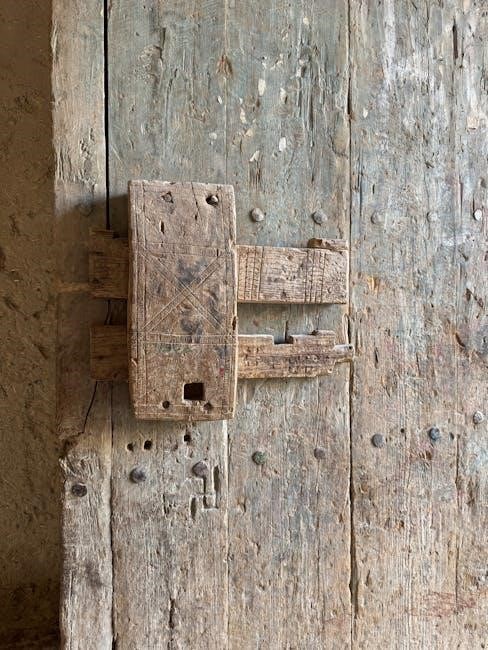
Importance of High-Security Keys
Manual door lock security is fundamentally linked to the keys used. Standard keys are easily duplicated, posing a risk if lost or stolen. High-security keys incorporate advanced designs, like restricted keyways and intricate cuts, making unauthorized duplication extremely difficult. These keys often require specialized equipment and authorization for copying.
Investing in high-security keys significantly elevates protection against intrusion. They resist picking, bumping, and other common lock manipulation techniques. Consider keys with patented designs offering legal protection against unauthorized duplication. Regularly check for signs of key wear and replace them proactively to maintain optimal security.
Reinforcing Door Frames and Strike Plates
A manual door lock is only as strong as its installation and the surrounding structure. Weak door frames and flimsy strike plates are prime targets for forced entry, rendering even robust locks ineffective. Reinforcing these components is crucial for maximizing security.
Install a heavy-duty strike plate secured with longer screws that reach into the door frame’s stud. Consider a wrap-around strike plate for added strength. Reinforce the door frame itself with a metal reinforcement kit, particularly around the latch and deadbolt areas. Addressing these vulnerabilities significantly increases resistance to kick-ins and other forceful attacks.
Using Deadbolts in Conjunction with Knob/Lever Locks
For enhanced security with a manual door lock system, combining a deadbolt with a knob or lever lock is highly recommended. Knob and lever locks are convenient for everyday use but offer limited resistance to forced entry. A deadbolt provides a significantly stronger locking mechanism, extending further into the door frame.
Using both types creates a layered defense. The knob/lever lock offers quick access, while the deadbolt provides robust security when needed. This dual-lock approach dramatically increases the time and effort required for a potential intruder, deterring break-ins and improving overall home safety.
Manual Door Locks and Home Insurance
The presence of robust manual door locks can positively influence your home insurance premiums. Insurance providers view secure doors as a significant deterrent to burglary, reducing the risk of claims. Installing high-quality deadbolts, reinforced strike plates, and solid-core doors demonstrates a commitment to home security.
Having secure locks may result in lower insurance costs, as insurers recognize the reduced likelihood of a break-in. Documenting your security measures, including lock types and installation dates, can be beneficial when obtaining or renewing your policy. Prioritizing door security is a proactive step towards protecting your property and potentially saving money.
The Role of Manual Locks in Preventing Break-ins
Manual door locks play a crucial initial role in deterring break-ins, as the majority of burglaries occur through unsecured doors or windows. While not foolproof, a quality lock significantly increases the time and effort required for forced entry, often discouraging potential intruders. Deadbolts, in particular, offer enhanced resistance compared to standard knob locks.
However, relying solely on locks isn’t sufficient. Reinforcing door frames and using secure strike plates are vital complements. Regularly maintaining locks and being mindful of key security – avoiding duplication and loss – further strengthens your home’s defense against unauthorized access and potential criminal activity.
5-Lever Mortise Deadlocks: A Detailed Look
5-Lever Mortise deadlocks represent a significant upgrade in security compared to 3-lever systems, offering enhanced resistance to lock picking and forced entry. These locks feature a complex internal mechanism requiring manipulation of five separate levers for unlocking, making them considerably more difficult to compromise. They can also be ‘keyed alike’ for convenience across multiple doors.
However, 5-lever locks can be more expensive and require professional installation due to their intricate design. While highly secure, they aren’t impervious, and a reinforced door frame and strike plate are still recommended for optimal protection against determined intruders.
Advantages of 5-Lever Systems
5-Lever systems provide a substantial security advantage over simpler 3-lever deadlocks, significantly increasing resistance to common lock-picking techniques. The complexity of manipulating five separate levers demands greater skill and time from potential intruders, deterring many attempts. This enhanced security translates to greater peace of mind for homeowners and business owners alike.
Furthermore, these systems can be ‘keyed alike’, allowing a single key to operate multiple locks throughout a property, improving convenience without compromising security. They represent a robust and reliable solution for securing valuable assets and protecting against unauthorized access.
Disadvantages and Considerations
Despite their enhanced security, 5-Lever Mortice deadlocks aren’t without drawbacks; Installation can be more complex and typically requires a skilled locksmith, increasing initial costs compared to simpler lock types. The intricate mechanism also means repairs can be more involved and potentially expensive if damaged.
Additionally, while highly secure, they aren’t impervious to determined attacks. Experienced lock pickers, though rare, can still compromise these systems with specialized tools and techniques. Careful consideration of the door’s overall security – including the frame and strike plate – is crucial to maximize effectiveness.
Thumb Turn Locks: Convenience vs. Security
Thumb turn locks prioritize ease of use, offering quick internal operation without fumbling for keys. However, this convenience introduces security vulnerabilities. If a burglar gains access – through a window, for example – the readily accessible thumb turn presents an easy means of unlocking the door from the inside, bypassing the primary locking mechanism.
This risk is amplified if the door has glass panels near the lock, allowing visibility and access to the thumb turn. While suitable for internal doors or as a secondary lock, relying solely on a thumb turn for exterior doors is generally discouraged due to the compromised security level.
Cylinder Locks and Locking Points
Cylinder locks, a common component in many manual door locks, utilize a key to operate a mechanism engaging multiple locking points. These points, typically found along the door’s edge, significantly enhance security compared to single-point latch systems. A robust system employs at least three, often five, separate locking points activated simultaneously by the cylinder.
This multi-point locking action distributes the force across the door and frame, resisting forced entry attempts. The number and quality of locking points directly correlate with the lock’s resistance to attack, making systems with five locking points considerably more secure than those with fewer.
Choosing the Right Manual Door Lock for Your Needs
Selecting the appropriate manual door lock demands careful consideration of your security priorities and budget. For basic security, a knob or lever lock might suffice, but for enhanced protection, a deadbolt is crucial. Consider the door type – rim locks suit specific applications, while mortise locks offer high security but require professional installation.
Evaluate potential vulnerabilities; reinforce door frames and strike plates alongside lock upgrades. If convenience is key, a thumb turn lock offers quick operation, but assess the risk of accessibility from windows. Prioritize high-security keys to deter lock picking and ensure lasting peace of mind.
Installation and Maintenance of Manual Door Locks
Proper installation is paramount for any manual door lock’s effectiveness. While some simpler locks can be DIY-installed, mortise and high-security deadbolts often necessitate a professional locksmith to ensure correct alignment and secure fitting. Regular maintenance is equally vital; lubricate the cylinder and moving parts periodically to prevent sticking and ensure smooth operation.
Inspect strike plates for looseness and reinforce them if needed. Check keys for wear and duplication concerns. Address any signs of forced entry immediately. Consistent upkeep extends the lock’s lifespan and maintains its protective capabilities, safeguarding your property.
Future Trends in Manual Door Lock Technology
Despite the rise of smart locks, manual door lock technology isn’t stagnant. Innovations focus on enhancing existing mechanisms rather than complete overhauls. Expect advancements in high-security key control, incorporating anti-pick and anti-bump features for greater resilience against traditional attacks. Materials science will yield stronger, more durable lock bodies and components.
Hybrid systems, blending manual operation with limited electronic features – like keyless entry for trusted individuals – may emerge. Furthermore, improved door frame reinforcement techniques will complement lock upgrades, creating a holistic security solution. The focus remains on robust, reliable physical security.
Leave a Reply
You must be logged in to post a comment.