Manual Sawmill: A Comprehensive Overview (Updated 02/14/2026)
Manual sawmills offer a traditional approach to timber processing, balancing cost-effectiveness with operational limitations, requiring careful seasonal and waste management strategies.
Manual sawmills represent a foundational method of timber harvesting, predating widespread electrification and automation. These mills rely on human power, or limited mechanical assistance, to convert logs into lumber. Today, they continue to serve niche markets, particularly in remote locations or for small-scale operations where the high initial investment of larger, automated facilities isn’t justifiable.
The resurgence of interest in manual milling stems from a desire for self-sufficiency, sustainable forestry practices, and the unique characteristics of wood sawn in this manner. Understanding the operational nuances, advantages, and disadvantages is crucial for anyone considering this approach. Careful consideration of seasonal impacts and waste management is also paramount for efficient operation.
Historical Context of Manual Sawmills
Manual sawmills boast a rich history, evolving from simple pit saws used since Roman times to more complex frame saws powered by water or wind during the medieval period. These early mills significantly increased lumber production compared to hand-hewn timber, fueling construction and shipbuilding. The 18th and 19th centuries saw advancements in circular and band saw designs, though many remained reliant on manual labor.
The industrial revolution gradually replaced manual operations with steam and then electric power. However, manual mills persisted in areas lacking infrastructure or for specialized tasks. Today, a renewed appreciation for traditional craftsmanship and sustainable practices has sparked a revival, blending historical techniques with modern understanding.
Types of Manual Sawmills
Manual sawmills primarily fall into three categories: circular, band, and frame sawmills. Circular sawmills utilize a large rotating circular blade, efficient for processing larger diameter logs, though requiring significant physical effort. Band sawmills employ a continuous loop of toothed steel, offering thinner kerfs and greater flexibility for various cuts.
Frame sawmills, the oldest type, feature a reciprocating frame holding multiple blades, ideal for processing smaller timber. Each type presents unique advantages and disadvantages regarding production speed, cut accuracy, and the physical demands placed on the operator, necessitating careful consideration based on specific needs.
Circular Sawmills
Circular sawmills are characterized by a large, rotating circular blade, typically powered manually via cranks or levers. They excel at rapidly processing larger diameter logs, making them suitable for high-volume, albeit physically demanding, operations. However, they produce a wider kerf – the material removed by the blade – resulting in more waste compared to band sawmills.
Blade maintenance and safety are paramount concerns. Operators must regularly sharpen and tension the blade, while adhering to strict safety protocols to prevent injuries. Despite their simplicity, circular sawmills require considerable strength and stamina for sustained use.
Band Sawmills
Band sawmills utilize a continuous loop of toothed steel running over two or more wheels, offering a thinner kerf and thus greater timber yield than circular saws. Manual band sawmills require consistent, rhythmic operation to maintain blade speed and cutting accuracy. They are particularly well-suited for processing smaller diameter logs and achieving more precise cuts.
Spring steel is often employed in band saw blade construction due to its flexibility and resilience, enabling it to navigate curves and irregular log shapes. However, spring steel blades require frequent sharpening and are prone to breakage if improperly tensioned or used for heavy-duty cuts.
Frame Sawmills
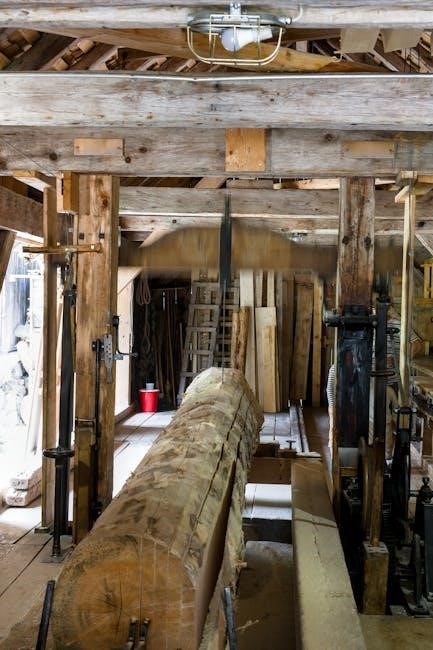
Frame sawmills represent one of the earliest forms of mechanical sawing, employing a reciprocating frame holding multiple blades. These mills are characterized by their robust construction and ability to handle large-diameter logs, though they typically offer slower production rates compared to band or circular designs.
Historically significant, frame sawmills demand considerable physical effort for operation, relying on manual power or water wheels to drive the reciprocating motion. While less common today, their simplicity and ability to process irregularly shaped timber make them suitable for specialized applications or remote locations where modern equipment is impractical.
Components of a Manual Sawmill
A manual sawmill’s functionality hinges on several key components working in unison. Central to the operation is the saw blade itself, requiring careful selection based on wood type and desired cut. Log handling equipment, including basic levers or more advanced power loaders, facilitates efficient timber movement.
Crucially, a sturdy frame and support structure provides stability during the sawing process. These components, often constructed from durable materials like steel, must withstand significant stress. Optimizing the interplay between these elements is vital for both productivity and operator safety, ensuring consistent and accurate timber processing.
Saw Blade Selection & Types
Selecting the correct saw blade is paramount for efficient manual sawmill operation. Spring steel blades are common due to their flexibility and affordability, suitable for light-duty cuts on bandsaws. However, their durability is limited, necessitating frequent sharpening or replacement. Different tooth configurations – stamped versus sharpened – impact cutting performance.
Blade type depends on the wood being processed; harder woods require more robust blades. Kohnle emphasizes quality cutting through extensive development. Careful consideration of material cost, advantages, and disadvantages is crucial for maximizing blade lifespan and achieving desired timber yields.
Log Handling Equipment (Power Loaders)
Efficient log handling is critical in a manual sawmill, and power loaders significantly enhance productivity. Various types are currently in use, facilitating the movement of logs from the yard directly to the sawmill. These loaders reduce manual labor and improve throughput, especially when dealing with large volumes or heavy timber.
However, the selection of a power loader requires careful evaluation of its advantages and disadvantages. Factors like cost, capacity, and terrain suitability must be considered. Proper log storage, keeping them wet to prevent checking, complements loader efficiency.
Frame and Support Structure
A robust frame is paramount for any manual sawmill, providing stability and ensuring accurate cuts. This structure must withstand significant stress from log weight and sawing forces. Typically constructed from heavy timbers or steel, the frame supports the saw blade and guides log movement.
The design should prioritize rigidity to minimize vibration, directly impacting cut quality. Basic softwood sawmill processing involves log storage in a yard, highlighting the need for a frame capable of handling consistent material flow. Material selection, like spring steel for components, influences overall durability and performance.
Operational Considerations

Efficient sawmill operation demands meticulous planning and execution. Log preparation, including debarking, is crucial for blade longevity and timber quality. Sawing techniques must be adapted to different wood types, considering grain direction and density for optimal yield.
Safety is paramount; strict adherence to procedures is non-negotiable. Understanding seasonal impacts – spring’s moisture, summer’s heat – influences wood handling and sawing efficiency. Waste management, utilizing sawdust and chips, minimizes environmental impact and potentially generates revenue. Careful timber distribution between equipment maximizes throughput.
Log Preparation & Debarking
Proper log preparation is fundamental to efficient sawmill operation. Maintaining logs in a wet state within the log yard prevents checking and warping, crucial for maximizing usable timber. Debarking, removing the outer layer, protects saw blades from abrasive damage and reduces wear, extending their lifespan.
Effective debarking also improves timber quality, facilitating better preservative treatment and finish adhesion. The method – manual or mechanical – depends on scale and budget. Thorough preparation ensures cleaner cuts, reduces downtime, and ultimately boosts overall production efficiency within the manual sawmill process.
Sawing Techniques for Different Wood Types
Optimal sawing techniques vary significantly based on wood species and desired end-product. Softer woods generally require faster feed rates and sharper blades, while hardwoods demand slower, more deliberate cuts to prevent splintering and ensure clean kerfs. Band sawmills excel at resawing, producing consistent thicknesses, while circular mills are suited for dimension lumber.
Understanding grain orientation is also vital; quarter sawing yields stronger, more stable lumber, though with reduced yield. Adapting blade tension and speed to each wood type minimizes waste and maximizes the quality of the sawn timber, crucial for manual sawmill productivity.

Safety Procedures for Manual Sawmill Operation
Prioritizing safety is paramount when operating a manual sawmill. Operators must wear appropriate personal protective equipment (PPE), including safety glasses, hearing protection, and sturdy footwear. Maintaining a clear work area, free from obstructions, is essential. Regular blade inspections are crucial to identify cracks or damage, preventing catastrophic failures.
Emergency stop mechanisms should be readily accessible and tested frequently. Proper training on sawmill operation, including lockout/tagout procedures, is non-negotiable. Never operate the sawmill when fatigued or under the influence of any substance. Vigilance and adherence to safety protocols minimize risk.
Advantages and Disadvantages of Manual Sawmills
Manual sawmills present a compelling balance of benefits and drawbacks. Advantages include lower initial investment costs compared to automated systems and suitability for small-scale or portable operations. They offer greater control over cutting parameters, ideal for specialized timber needs. However, production capacity is significantly lower, demanding more labor and time.
Operational costs can be high due to manual effort. Efficiency is inherently limited, and consistent quality requires skilled operators. Thorough investigation of these advantages and disadvantages is vital before committing to a manual sawmill, ensuring it aligns with specific project requirements.
Cost Analysis: Initial Investment vs. Operational Costs
Manual sawmill costs reveal a trade-off. Initial investment is relatively low, primarily covering the sawmill frame, blade, and basic log handling tools. However, ongoing operational costs can be substantial. Labor represents a significant expense, as manual operation is time-intensive and requires skilled personnel.
Maintenance, including blade sharpening and component replacement (like spring steel blades), adds to expenses. While avoiding the high capital outlay of automated systems, manual mills demand consistent expenditure on labor and upkeep, potentially exceeding automated costs over the long term.
Production Capacity & Efficiency Comparison
Manual sawmills inherently exhibit lower production capacity compared to automated systems. Output is directly tied to operator skill, physical endurance, and consistent effort. Efficiency is also impacted by log handling – relying on manual or basic power loader assistance slows processing times.
While capable of producing high-quality lumber, manual mills struggle to meet large-scale demands. Optimizing timber yield and reducing waste becomes crucial to maximizing efficiency. Compared to modern sawmills, manual operations demonstrate significantly reduced throughput, making them best suited for smaller, specialized projects.
Seasonal Considerations for Manual Sawmill Operation
Manual sawmill operation is profoundly affected by seasonal changes. Spring presents advantages with readily available timber, but potential disadvantages due to wet, muddy conditions hindering log handling. Summer offers drier wood and easier access, yet heat can impact operator stamina and increase fire risk.
Autumn provides optimal temperatures, but falling leaves can create hazards. Winter’s frozen ground aids transport, however, cold temperatures reduce work efficiency and can affect material properties. Thorough investigation of these seasonal impacts is vital for consistent production.
Spring: Advantages & Disadvantages
Spring offers a prime window for manual sawmill operation due to newly available timber following winter dormancy. However, this season presents significant challenges. Increased moisture from snowmelt and rainfall creates muddy conditions, hindering log transport and potentially damaging equipment.
Log yards require diligent management to prevent wood decay. While timber is readily accessible, the wet environment complicates debarking and sawing. Careful planning and potentially utilizing power loaders become crucial to mitigate these disadvantages and maximize spring production efficiency.
Summer: Advantages & Disadvantages
Summer generally provides ideal conditions for manual sawmill operations, offering drier wood and easier log handling. Increased daylight hours extend productive work time, boosting overall capacity. However, prolonged heat can lead to timber stress and warping if logs aren’t properly stored and shaded.
The risk of wildfires also necessitates heightened safety precautions around the sawmill. While timber is plentiful, maintaining optimal moisture content in logs becomes critical to prevent sawing difficulties and ensure quality lumber. Efficient wood waste management is also vital during drier months.
Autumn/Winter: Advantages & Disadvantages
Autumn and Winter present unique challenges for manual sawmills. Cooler temperatures reduce timber stress and maintain optimal moisture levels, improving sawing precision. However, shorter daylight hours significantly limit operational time, decreasing production capacity. Increased precipitation can create muddy conditions, hindering log transport and handling.
Frozen ground can also pose difficulties for equipment maneuverability. Maintaining a dry working environment for operators becomes crucial. While log availability may be high, consistent operation requires diligent planning and potentially increased labor for snow removal and site maintenance.
Wood Waste Management in Manual Sawmills
Wood waste management is critical for manual sawmill sustainability. Sawdust and wood chips, often considered byproducts, represent valuable resources. These materials can be utilized for animal bedding, mulch, or even biomass fuel, generating additional income streams. Efficient waste handling minimizes environmental impact and reduces disposal costs.
Optimizing timber yield through careful sawing techniques is paramount. Reducing waste requires skilled operators and well-maintained equipment. Exploring secondary product opportunities, like wood pellets, further enhances resource utilization and promotes a circular economy within the sawmill operation.
Utilizing Sawdust and Wood Chips
Sawdust and wood chips, generated during manual sawmill operations, possess significant economic potential beyond disposal. They serve as excellent animal bedding, providing comfortable and absorbent conditions for livestock. Horticultural applications benefit from their use as mulch, suppressing weeds and retaining soil moisture.
Furthermore, these materials are increasingly valuable as biomass fuel for heating or power generation. Compressing them into wood pellets creates a renewable energy source. Innovative uses include composite material production, minimizing waste and maximizing resource efficiency within the sawmill’s ecosystem.
Optimizing Timber Yield & Reducing Waste
Optimizing timber yield in a manual sawmill demands meticulous log handling and precise sawing techniques. Careful consideration of log taper and defects is crucial for maximizing usable lumber from each piece. Implementing efficient cutting patterns, tailored to the specific wood type, minimizes kerf loss – the wood removed by the saw blade.
Reducing waste extends beyond the sawing process; proper storage prevents degradation. Utilizing smaller pieces and offcuts for secondary products, like pallets or kindling, further enhances resource efficiency. Analyzing production data identifies areas for improvement, fostering a sustainable approach.
Optimizing Timber Distribution in Sawmill Equipment
Optimizing timber distribution within a manual sawmill hinges on strategically allocating logs to equipment based on their characteristics. Larger, higher-quality logs are best suited for primary breakdown on the main saw, while smaller or defective logs can be efficiently processed on secondary machines.
Effective flow minimizes material handling and bottlenecks. Prioritizing cuts based on market demand and lumber grade maximizes profitability. Analyzing sawn timber results informs adjustments to the distribution process, ensuring efficient resource allocation and minimizing waste. Kohnle’s experience highlights quality cutting importance.

Material Selection for Sawmill Components (Spring Steel)
Spring steel is a frequent choice for manual sawmill components, particularly saw blades, due to its advantageous flexibility and cost-effectiveness; It’s well-suited for stamped teeth on bandsaws, enabling light-duty cuts. However, spring steel’s flexibility also presents a disadvantage – it dulls relatively quickly.
Alternative materials offer increased durability but often at a higher price point. Careful consideration of cutting needs and budget is crucial. The balance between initial investment and long-term blade replacement costs dictates the optimal material selection for sawmill longevity.
Advantages of Spring Steel in Saw Blades
Spring steel offers significant advantages when utilized in manual sawmill saw blades, primarily its inherent flexibility. This characteristic is particularly beneficial for bandsaw blades with stamped teeth, allowing for a degree of resilience during operation. Its relatively inexpensive nature makes it an accessible option for smaller operations or those starting out.
The flexibility aids in navigating imperfections within the wood, reducing the risk of blade breakage. However, this advantage comes with a trade-off – spring steel tends to dull more quickly than harder alloys, necessitating more frequent sharpening or replacement.
Disadvantages of Spring Steel & Alternative Materials
Despite its affordability and flexibility, spring steel exhibits notable drawbacks for manual sawmill blades. Its rapid dulling requires frequent maintenance, impacting productivity and increasing long-term costs. For heavier-duty cuts or processing harder wood species, spring steel’s limitations become more pronounced.
Alternative materials, such as high-carbon steel or specialized alloy steels, offer superior edge retention and durability. While more expensive initially, these materials reduce downtime and provide a cleaner cut. Consideration of material cost versus operational efficiency is crucial when selecting the optimal blade material.
Leave a Reply
You must be logged in to post a comment.